
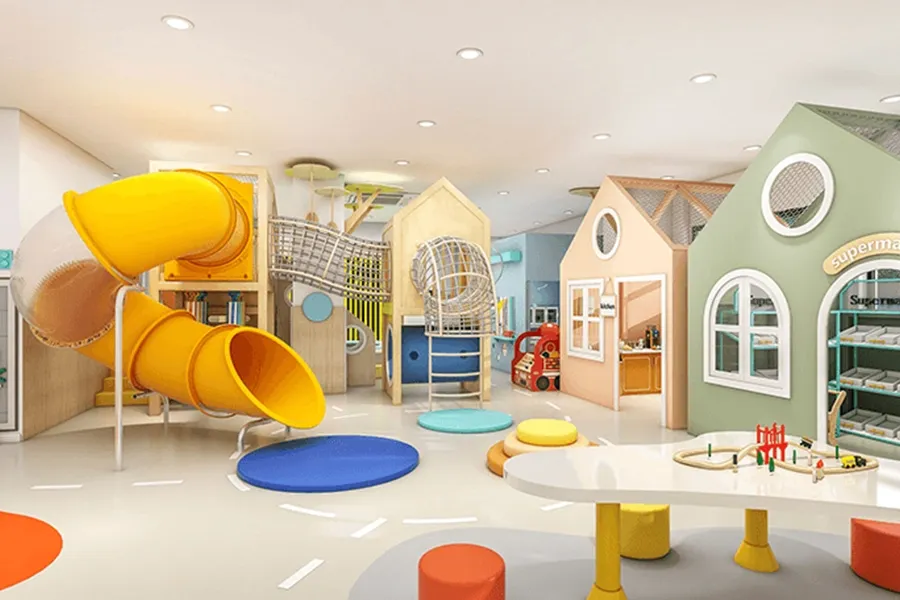
Opening an indoor play area can look simple from the outside. Pick some colorful equipment, fill the room, and let children enjoy it. In practice, the planning stage is where most of the important decisions are made.
The size of the room, ceiling height, age range, traffic flow, and the type of business all shape what will work. A playground for a family entertainment center will not be planned in the same way as one inside a church, daycare, restaurant, or community facility. Getting those basics right early can save a lot of changes later.
Start With the Room, Not the Equipment
Before looking at slides or climbing features, measure the space carefully.
Columns, low ceilings, doors, windows, emergency exits, and fixed walls can reduce the usable area. A floor plan that looks generous on paper may feel very different once circulation space and seating are considered.
Working with an indoor playground equipment manufacturer USA can help turn those measurements into a layout built around the real room rather than forcing a standard design into it. The aim is to use the available footprint well while leaving sensible routes for children, parents, and staff.
It is also worth thinking about what happens around the playground. Check-in desks, birthday areas, shoe storage, seating, and food service can all affect how people move through the building.
Match Activities to the Age Group
A good playground does not need to offer everything to everyone.
Toddlers generally need a very different environment from older children. Smaller steps, softer elements, low-level activities and clear sightlines can suit younger users, while older children may look for more climbing, movement, and challenge.
Separating age groups can also make the space easier to understand. Parents can quickly see where younger children are meant to play, while older children have a zone that feels appropriate for them.
The mix of activities should follow the expected visitors. A venue aimed mostly at preschool families will need a different balance from a larger entertainment center serving children across several age groups.
Give Traffic Flow Some Thought
Children rarely move through a playground in neat, straight lines.
They run back to favorite features, stop suddenly, and follow friends from one area to another. That is why the routes into and around the play area matter.
Entrances should not immediately create a bottleneck. Popular features should have enough surrounding space for children to approach and leave without crowding a narrow point.
With commercial indoor playground equipment, the equipment itself is only one part of the layout. Seating, viewing areas, walkways, and access for staff all need to fit around it. A busy floor can still feel organized when those areas are planned together.
Leave Room for Adults Too
Parents and caregivers often spend far longer in the venue than expected. Their experience matters.
Comfortable seating with useful sightlines can make it easier to supervise children without following them around every minute. In restaurants or entertainment venues, adults may also want to eat, work on a laptop, or talk while children play.
Staff need practical access as well. Cleaning, inspections, and day-to-day supervision are much easier when the play structure is not packed tightly against every available wall.
A few unused feet in the right place can sometimes be more valuable than squeezing in one additional activity.
Think Beyond Opening Day
The first layout does not have to remain unchanged forever.
An enterprise might find that one age group visits more than they anticipated, or a part of the area becomes very popular. More party space may be needed due to the possibilities of increased birthday bookings. A venue may later want to introduce another play feature.
Planning some flexibility from the start makes these changes easier. That might mean keeping a clear expansion zone or choosing a design that can be modified later.
It is also sensible to ask how replacement parts, routine cleaning, and maintenance will be handled. Equipment that looks impressive on opening day still needs to be practical several years later.
Conclusion
A successful indoor playground begins long before the first child walks through the door. Careful measurements, age-appropriate activities, sensible traffic flow, adult seating, and room for future changes all affect how well the space works.
For businesses comparing custom indoor play options and planning support, indoorplaygroundcreations.com offers information on commercial playground design, equipment and installation services.